Low-Risk Home-Prepared Foods in Alberta
Alberta is the ONLY Canadian province with a home kitchen exemption similar to US cottage food laws. Sell low-risk foods from home without permits or fees.
Last Updated: June 2026 • Verified with official sources
Alberta Cottage Food Law Overview
Alberta's cottage food law allows home bakers to produce and sell low-risk foods directly to consumers.
⚠️ IMPORTANT: Canada does NOT have cottage food laws like the US. Alberta is the ONLY exception.
No revenue limit (unlimited earning potential)
NO registration, permits, or fees required
NO inspections required
Food safety training recommended but not mandatory
Can sell from home, online, mail-order, farmers' markets, and special events
Effective June 1, 2020 under Alberta's Food Regulation
What You Can (and Can't) Sell
- Baked goods (cookies, cakes, breads, pastries)
- Candy and confections
- Fruit pies and cobblers
- Jams and jellies
- Dried fruits and vegetables
- Popcorn and snack mixes
- Granola and cereals
- Roasted coffee beans
- Dried herbs and spices
- Foods requiring refrigeration
- Cream-filled pastries
- Meat products and jerky
- Canned goods (non-acidified)
- Pickled products
- Dairy products
- Nut butters
- Pet treats
Sales Limits & Locations
No limit
Alberta's Low-Risk Home-Prepared Foods program has NO revenue cap. You can earn unlimited income from low-risk food sales. This is unique in Canada - no other province offers this.
- Farmers markets
- Direct sales from home
- Special events (craft fairs, festivals)
- Online sales with shipping (mail-order allowed)
- Any direct-to-consumer channel
- Cannot sell through retail stores or restaurants (direct-to-consumer only)
- Must be low-risk foods (no refrigeration required)
- Must follow labeling requirements
- Must practice safe food handling
Requirements & Regulations
NO registration required. NO permits needed. NO fees to pay. This is a true exemption from food premises licensing.
NO inspections required. Your home kitchen does not need to meet commercial standards.
Food safety training is recommended but NOT mandatory. Consider taking a course to ensure safe food handling practices.
Not required by law, but strongly recommended for liability protection.
Check local municipal bylaws for home-based business restrictions. The province allows it, but your city may have zoning rules.
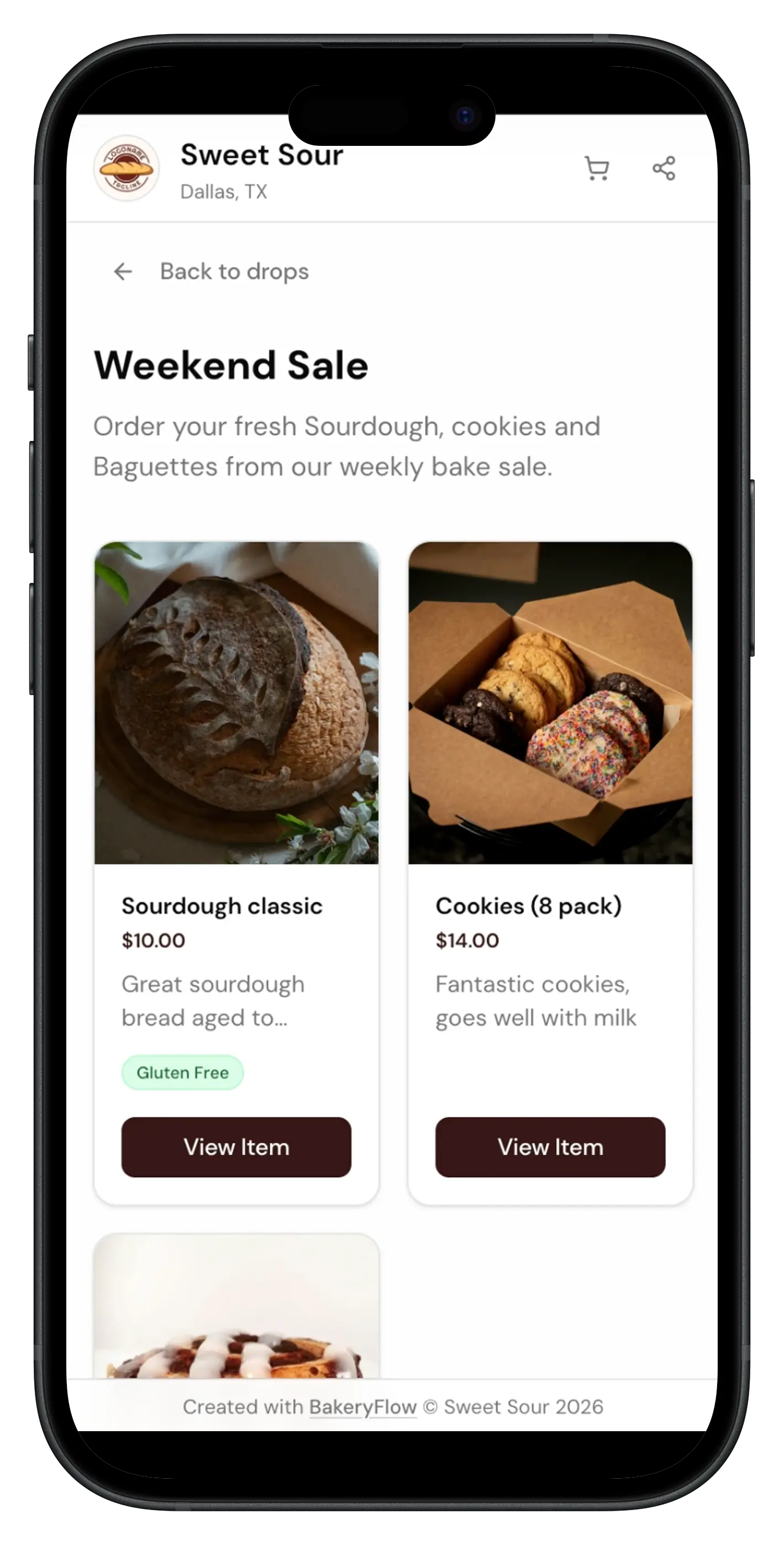
Sell out before you bake
BakeryFlow is a mobile app for cottage bakers. Take pre-orders, manage drops, and get paid—all from your phone.
Looking for 5 bakers to help shape the product. Early users get free access.
Labeling Requirements
- Statement: 'This product was prepared in a home-based food business that is not subject to routine inspection'
- Product name
- Ingredient list in descending order by weight
- Net weight or volume
- Producer name and address
- Allergen information (if applicable)
Legible font size
All information must be on the label
Production & Kitchen Requirements
Alberta cottage food operations must follow specific production rules to ensure food safety.
- All products must be made in your primary residence kitchen
- Kitchen must be maintained in a clean and sanitary condition
- Pets should be kept out of the kitchen during food production
- Use potable (drinking quality) water for all food preparation
- Store ingredients properly to prevent contamination
- Maintain proper refrigeration temperatures (below 41°F)
- Wash hands thoroughly before and during food preparation
- Use clean utensils, equipment, and food-contact surfaces
- Keep accurate records of production dates and sales
- Do not prepare cottage foods at the same time as potentially hazardous foods
Where & How You Can Sell
Allowed Sales Channels
Sell directly to consumers at approved farmers markets throughout Alberta.
⚠️ Some markets may require vendor registration
Customers can pick up orders from your home. Accept orders online, by phone, or in person.
⚠️ Must comply with local zoning laws for home-based businesses
Sell at fairs, festivals, church events, and craft shows.
Accept orders through a website or social media for local pickup.
⚠️ Cannot ship or deliver products
Prohibited Sales Channels
Cannot sell through grocery stores, convenience stores, or other retail outlets
Cannot sell to restaurants, cafes, or food service establishments
Cannot sell to third parties for resale. Must sell directly to end consumers.
Cannot ship products via USPS, UPS, FedEx, or any delivery service
Additional Exemptions
- Bake sales and fundraisers by nonprofit organizations may be exempt from labeling if all proceeds go to the organization
- Products given away for free (samples, gifts) do not require labeling
Violations & Enforcement
While Alberta has a permissive cottage food law, violations can result in penalties.
Penalty: Cease and desist order, potential fines, and possible legal action for repeat offenses
Penalty: Warning letter for first offense, fines for continued violations
Penalty: Immediate shutdown of operation, fines, and potential legal action
Penalty: Investigation by health department, potential civil liability, and criminal charges if negligence is proven
Frequently Asked Questions
YES. Alberta is the ONLY Canadian province with a home kitchen exemption similar to US cottage food laws. Other provinces (Ontario, BC, Quebec, etc.) require full commercial food premises licenses, inspections, and permits. Do not assume you can sell from home in other provinces.
NO registration or permits are required with Alberta Health Services for the Low-Risk Home-Prepared Foods program. However, you may want to register your business name and obtain a GST number for tax purposes if your revenue exceeds $30,000.
YES! You can list products on Etsy or your own website AND ship them via mail-order. Alberta allows online sales and shipping, unlike many US cottage food laws.
⚠️ ALWAYS verify with official sources before starting your business. Visit Alberta.ca and search for 'Low-Risk Home-Prepared Foods' or contact Alberta Health Services. Laws can change, and this information may become outdated.
The law does not explicitly prohibit helpers, but all production must occur in your home kitchen. If you hire employees, you may trigger additional business regulations and tax requirements.
Yes. Most cottage food products are subject to sales tax. You must register with the state tax authority, collect sales tax from customers, and file regular returns.
Yes, as long as it's your primary residence. However, check your lease agreement as some landlords prohibit home-based businesses.
List all ingredients in descending order by weight. If your product contains any of the major allergens (milk, eggs, wheat, soy, peanuts, tree nuts, fish, shellfish), include a 'Contains:' statement on the label.
Getting Started Checklist
Follow these steps to launch your Alberta cottage food business:
- Choose your product(s) from the allowed foods list
- Perfect your recipes and test them with friends/family
- Design and print labels with all required information
- Set your prices (factor in ingredients, time, and packaging)
- Register for sales tax collection
- Consider getting liability insurance
- Set up a simple bookkeeping system to track income and expenses
- Find your first sales venue (farmers market, online, etc.)
- Start small and scale as you gain experience
Scaling Beyond Cottage Food
If your business outgrows the cottage food law, consider these options:
- Rent time in a commercial kitchen or shared-use facility
- Apply for a retail food establishment license
- Build or lease your own commercial kitchen space
- Partner with a co-packer for larger production runs
- Explore wholesale opportunities with proper licensing